 +91 - 8010-555-111
 INR
INR  AUD - Australian Dollar
  BHD - Bahraini Dinar
  GBP - British Pound
  CAD - Canadian Dollar
  EUR - Euro
  HKD - Hong Kong Dollar
  IDR - Indonesian Rupiah
  ILS - Israeli New Shekel
  JPY - Japanese Yen
  KWD - Kuwaiti Dinar
  MYR - Malaysian Ringgit
  MUR - Mauritian Rupee
  NZD - New Zealand Dollar
  OMR - Omani Rial
  PHP - Philippine Peso
  QAR - Qatari Riyal
  SAR - Saudi Riyal
  SGD - Singapore Dollar
  CHF - Swiss Franc
  USD - US Dollar
  AED - United Arab Emirates Dirham
  VND - Vietnamese Dong











Star Sapphire
 Good Luck
Intuition & Spiritual Insight
Mental Stability & Focus
Symbolic Protection & Strength
Good Luck
Intuition & Spiritual Insight
Mental Stability & Focus
Symbolic Protection & Strength
What is Star Sapphire? — The Science of Asterism
Star Sapphire is a variety of Corundum — Aluminium Oxide (Al2O3) — the same mineral family as Blue Sapphire, Ruby, Yellow Sapphire, and all other sapphire varieties. What makes Star Sapphire unique within this already extraordinary family is not its colour but its internal structure: the presence of microscopic needle-like inclusions of rutile (titanium dioxide) aligned in three sets of parallel planes within the hexagonal crystal structure of the sapphire, each set oriented 60 degrees from the others.
When light strikes these perfectly oriented rutile needles — known in the gemological world as rutile silk — and the stone has been correctly cut as a domed cabochon, each set of parallel needles reflects light along its own axis, creating three bands of reflected light. These three bands intersect at a single central point, creating the six-rayed star that gives Star Sapphire its name and its magic.
Star Sapphire ranks 9 on the Mohs scale — second only to Diamond in hardness — making it one of the most durable gemstones available. The irony of Star Sapphire is profound: the very inclusions that would normally reduce the value of a transparent sapphire are precisely what create its most extraordinary and most prized quality. In Star Sapphire, inclusions are not flaws — they are the gemstone.
Why Star Sapphire Must Be Cut as a Cabochon
Unlike faceted transparent sapphires, Star Sapphire must always be cut as a smooth, domed cabochon — a polished, convex, unfaceted form. The dome of the cabochon acts as a lens, focusing and concentrating the reflected light from the rutile needles into the six-pointed star at the top of the stone. A flat or faceted cut destroys the optical geometry required for asterism. The height and curvature of the dome must be precisely calibrated to the depth of the rutile silk within the stone — a skilled gem cutter's most important task with Star Sapphire is finding the exact dome height and centre point that produces the sharpest, most centred, most complete star possible.
Star Sapphire's asterism is one of the most extraordinary examples of nature's own optical engineering — millions of years of crystal growth producing a precise internal architecture of microscopically aligned rutile needles that acts as a natural diffraction grating, splitting light into the celestial star that has captivated humans for centuries. This is not a surface effect, not a coating, not a treatment — it is a phenomenon that originates deep within the very structure of the stone itself.
Natural Asterism vs Induced Asterism — The Most Critical Distinction
Natural Asterism — The Genuine Star Sapphire
In genuine natural Star Sapphire, the asterism is caused by rutile inclusions that grew within the sapphire crystal during its formation over millions of years deep within the earth. The rutile needles are present throughout the entire depth of the stone — not confined to its surface or a shallow layer. When the stone is examined under magnification, the rutile silk can be seen running through the body of the stone. The star appears to float within and above the stone, not merely on its surface.
Natural asterism has several characteristic qualities that distinguish it from induced effects. The star typically has six rays of relatively even, warm, silky, slightly diffuse quality — genuine rutile silk produces a star that is beautiful but not artificially perfect. The rays may have slight natural variations in length, brightness, or straightness. The star moves smoothly and naturally as the stone is tilted. Inclusions visible elsewhere in the stone (cloudiness, colour zoning, natural fingerprints) are signs of a genuinely natural stone.
Induced Asterism — The Critical Warning
Induced asterism is created by several artificial processes designed to simulate the star effect in stones that either lack natural rutile silk or have had their silk destroyed by heat treatment:
Heat-induced asterism (diffusion treatment): Low-grade or colourless sapphires are treated with titanium-bearing compounds at very high temperatures. The titanium diffuses into a shallow layer just below the stone's surface, where it forms artificial rutile needles. This creates a star — but only in a very thin surface layer, not throughout the stone. Under magnification, the rutile needles can be seen to be confined to the surface zone. The surface of the stone often shows a slightly melted or orange-peel texture characteristic of diffusion treatment. Laboratory testing (spectrometry, UV fluorescence) readily reveals this treatment.
Synthetic star sapphires (Linde Stars and similar): Synthetic star sapphires have been produced since 1947, most famously by the Linde Air Products Company of New York — known in the industry as Linde Stars. These are entirely laboratory-created corundum (not natural sapphire) in which rutile needles are artificially introduced during the synthesis process. Linde Stars and similar synthetic star sapphires are immediately recognisable to experienced gemologists by their characteristically perfect, straight, evenly-rayed star — a perfection that is rarely found in natural stones and that the industry calls too good to be true. They are commercially available at very low prices and are entirely different from natural star sapphires.
Surface coatings and engravings: In the lowest quality imitations, a star is either engraved into the back of a glass or synthetic stone or applied as a reflective coating on the base. These are the most primitive forms of star simulation and are readily detectable even without laboratory equipment.
Critical Warning: The majority of commercially available "star sapphires" in the Indian market and globally have induced asterism — a star effect artificially created by heat treatment, diffusion treatment, or surface coating. These stones are NOT genuine natural star sapphires and command a tiny fraction of the price of genuine natural asterism stones. Shubh Gems stocks only natural asterism Star Sapphire. Understanding this distinction is the single most important thing any buyer of Star Sapphire needs to know. The single most reliable way to confirm natural asterism in a star sapphire is laboratory certification from a reputable gemological laboratory such as GIA, IGI, or GII.
Star Sapphire Properties
| Property | Details |
|---|---|
| Mineral Family | Corundum — Aluminium Oxide (Al2O3) |
| Hardness (Mohs) | 9.0 — Second only to Diamond; exceptional durability for all jewellery |
| Optical Phenomenon | Asterism — six-rayed star caused by rutile silk inclusions |
| Asterism Cause | Microscopic rutile (TiO2) needles in three orientations, 60 degrees apart |
| Cut | Always cabochon — the dome focuses light to produce the star effect |
| Colours Available | Blue (most prized), Black, Pink, Grey, Yellow, Green, White/Colourless |
| Finest Origin | Ceylon (Sri Lanka) — Ratnapura gem belt — world benchmark for star sapphires |
| Other Origins | Myanmar (Burma), Thailand, Australia, India, Madagascar |
| Shubh Gems Origin | Ceylon (Sri Lanka) — natural, unheated, untreated only |
| Treatment Status | Natural asterism ONLY — not induced by heat, diffusion, or surface coating |
| Star Quality | Six-rayed (standard) — twelve-rayed (exceptionally rare) |
| Birthstone | September — alongside standard blue sapphire |
| Ruling Planet | Saturn (Shani) in Vedic astrology — same as Blue Sapphire |
| Chakra | Third Eye (Ajna) and Throat (Vishuddha) — intuition and truth |
| Certification | IGI / GIA / GII — confirms natural origin, unheated, natural asterism |
Colour Varieties of Star Sapphire
Star Sapphire occurs in virtually every colour of the sapphire spectrum. Each colour variety has its own visual character, its own relative rarity, and its own energetic quality:
| Colour | Also Called | Rarity | Key Quality |
|---|---|---|---|
| Blue | Blue Star Sapphire | Most sought-after variety | Depth of blue + star sharpness |
| Black | Black Star Sapphire | Widely available | Star contrast on black base |
| Pink | Pink Star Sapphire | Rare | Vivid pink with clear star |
| Grey / Silver | Silver Star Sapphire | Uncommon | Silvery body with strong star |
| Yellow / Gold | Golden Star Sapphire | Rare | Warm golden tone with star |
| Green | Green Star Sapphire | Very rare | Vivid green with star — highly prized |
| White / Colourless | White Star Sapphire | Common | Classic star on clean white base |
Blue Star Sapphire is by far the most celebrated, most sought-after, and most historically significant variety — its combination of a rich blue body colour and a sharply defined six-rayed star being the ideal that has captured collectors and connoisseurs for centuries. Within blue star sapphires, the depth and saturation of the blue body colour and the sharpness and centredness of the star are the two primary quality determinants.
Ceylon (Sri Lanka) — The World's Most Celebrated Star Sapphire Source
Ceylon (Sri Lanka) — and specifically the Ratnapura gem belt of the island — is universally recognised as the world's most celebrated, most historically significant, and most astrologically prized source of Star Sapphire. The Ratnapura district, whose Sanskrit name literally means City of Gems, has been producing exceptional star sapphires for over two thousand years, with historical records of Ceylon star sapphire trade stretching back to ancient civilisations across India, China, Arabia, and Rome.
Ceylon star sapphires are celebrated for several characteristics that set them apart from material found elsewhere. Their body colour — whether blue, pink, yellow, or grey — tends to be cleaner, more evenly distributed, and more naturally attractive than star sapphires from other origins. The rutile silk in Ceylon stones is characteristically fine and evenly distributed — producing the silky, warm quality of asterism that distinguishes Ceylon material from the coarser silk of Australian black star sapphires or the denser silk of some Burmese material. Fine, unheated, untreated Ceylon Star Sapphires with strong, sharp, centred natural asterism are among the most coveted of all collector gemstones.
The Star of India: The world's most famous Star Sapphire — the 563-carat Star of India housed in the American Museum of Natural History in New York — was discovered in Sri Lanka. This extraordinary stone displays asterism on both sides — an exceptionally rare quality in any star sapphire — and its grayish-blue colour and perfectly centred double star have made it one of the most celebrated and most widely recognised gemstones in human history. The Star of India is the ultimate testament to Ceylon's extraordinary geological heritage as the home of the world's finest star sapphires.
✦ Why Shubh Gems for Star Sapphire? Shubh Gems stocks only fine quality, natural, unheated and untreated Star Sapphire from Ceylon (Sri Lanka) — stones with genuine natural asterism, individually certified, and backed by our Lifetime Guarantee of Authenticity.
Who Should Own Star Sapphire?
Star Sapphire as a Collector's Gemstone
Beyond astrology and jewellery, Star Sapphire occupies a special place in the world of serious gemstone collecting — a category of genuinely rare natural phenomena that serious collectors pursue with the same dedication and knowledge that art collectors bring to their most prized acquisitions.
Why serious collectors prize natural Star Sapphire:
- Genuine natural asterism is becoming increasingly rare as more and more sapphire rough is heat-treated to produce transparent stones — destroying the rutile silk and with it the potential for asterism. The global supply of fine, unheated, untreated Star Sapphires with strong natural asterism is genuinely declining.
- Every natural star sapphire is completely unique — no two stones display exactly the same colour, the same star quality, the same asterism intensity, or the same combination of these qualities. Natural variation makes every fine star sapphire a one-of-a-kind natural creation.
- The largest and most historically significant sapphires ever discovered have disproportionately been star sapphires — the Star of India (563 carats), the Black Star of Queensland (733 carats), the Serendipity Sapphire (2.5 million carats) — suggesting that the conditions that produce large sapphire crystals also often produce rutile silk.
- Fine blue star sapphires of exceptional quality from Ceylon — with vivid blue body colour, sharp and centred six-rayed star, and laboratory-confirmed natural, unheated status — command prices that rival and can exceed fine faceted sapphires of comparable weight.
- Twelve-rayed star sapphires — displaying two overlapping six-rayed stars caused by two distinct sets of rutile inclusions — are exceptionally rare and command extraordinary premiums among sophisticated collectors worldwide.
September Birthstone
Sapphire — in all its colour varieties, including Star Sapphire — is the designated birthstone for September, a distinction it has held since the formalisation of the modern birthstone list in 1912. Star Sapphire offers those born in September a uniquely magical and uniquely meaningful alternative to the standard faceted sapphire — sharing all of sapphire's birthstone significance and symbolism while adding its own extraordinary quality of celestial wonder. As a September birthstone, Star Sapphire is believed to bring its September-born wearers wisdom, protection, clarity of thought, and the intuitive guidance symbolised by the star within.
Vedic Astrological Significance
In Vedic astrology, Star Sapphire carries the same planetary association as Blue Sapphire — it is the ratna of Saturn (Shani Dev), the most complex and most transformative planetary force in the Vedic system. Like Blue Sapphire (Neelam), Star Sapphire is believed to strengthen Saturn's beneficial qualities in the birth chart and mitigate its adverse effects — bringing discipline, perseverance, karmic resolution, protection, and the steady accumulation of lasting wealth and recognition to those for whom Saturn is benefic.
Star Sapphire carries an additional quality that distinguishes it from plain Blue Sapphire in the astrological context: the star itself is considered a symbol of divine guidance — the three rays representing the three qualities of wisdom, faith, and hope; or in some traditions, the three cosmic forces of creation, preservation, and transformation. The moving star is seen as a representation of destiny's guiding light — ever present, ever shifting, always pointing toward the right path for the sincere seeker.
As with all powerful astrological gemstones, Star Sapphire must only be worn for astrological purposes after proper consultation with a qualified Vedic astrologer based on individual Kundali analysis. Shubh Gems provides free Kundali consultation to help determine suitability.
✦ Why Shubh Gems for Star Sapphire? At Shubh Gems, we source Star Sapphire from certified dealers with confirmed Ceylon Sri Lanka origin documentation. Every stone comes with an independent laboratory certificate confirming its natural Star Sapphire identity and geographic origin. Our Lifetime Guarantee of Authenticity ensures complete confidence in every purchase.
Star Sapphire Jewellery at Shubh Gems — Custom Rings & Pendants
Star Sapphire at Shubh Gems
- Fine Quality Loose Star Sapphires: Natural, unheated, untreated Ceylon Star Sapphire in a range of sizes, colours, and quality grades — each stone individually selected for star quality, body colour, and natural character. Fully certified by reputable gemological laboratories confirming natural origin, unheated untreated status, and natural asterism.
- Collector Pieces: For serious gem collectors, we offer exceptional fine quality Star Sapphires — stones of outstanding natural asterism, rich body colour, and significant carat weight that represent the finest available from Ceylon. Each piece individually evaluated and certified.
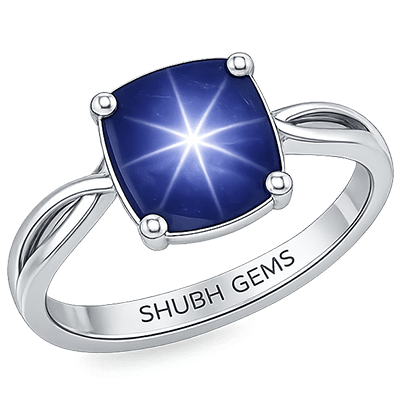
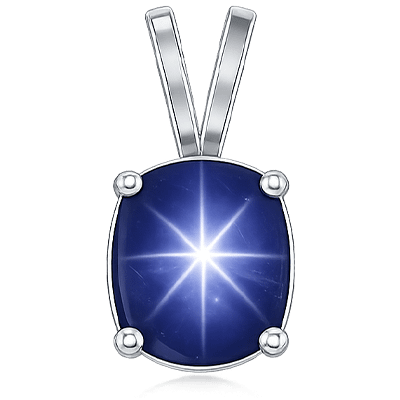
- Astrological Star Sapphire Rings: Star Sapphire set in gold, silver, or panchdhatu for Vedic astrological wearing — open-backed cabochon settings that ensure skin contact and maximum display of the star. Customised to your specific requirements.
- Fine Jewellery Settings: Star Sapphire pendants, rings, and bracelets in gold, white gold, silver, and rose gold — settings designed to display the star to maximum effect while protecting the stone.
- Free Kundali Consultation: Our Vedic astrology experts are available to assess your birth chart and advise whether Star Sapphire is the appropriate astrological gemstone for your specific planetary configuration.
- IGI / GIA / GII Certification: Every Star Sapphire at Shubh Gems is fully certified — confirming natural origin, unheated untreated status, Ceylon provenance, and natural asterism.
How to Care for Star Sapphire
- Clean with warm, mild soapy water and a very soft brush — Star Sapphire's Mohs 9 hardness means it is highly resistant to scratching, but the cabochon surface should be cleaned gently to maintain its polish.
- Avoid ultrasonic cleaners and steam cleaners — while the sapphire itself is durable, the rutile silk inclusions that create the star can be sensitive to the vibrations of ultrasonic cleaning. Gentle hand cleaning is always recommended.
- Avoid harsh chemicals — no household cleaners, bleach, or acid-based cleaners should contact the stone.
- Store separately from harder materials — while sapphire can only be scratched by Diamond, the cabochon dome can be damaged by sharp impacts. Store Star Sapphire pieces separately and handle with care.
- Display under point light source for maximum star effect — for display and appreciation, a single focused light source (LED torch, spotlight, or direct sunlight) produces the most dramatic and most clearly visible star. Diffuse lighting reduces or eliminates the star effect.
✦ Why Shubh Gems for Star Sapphire? At Shubh Gems, every Star Sapphire jewellery piece is crafted to your exact specifications — from stone selection to final design. Our expert craftsmen bring together the finest quality Star Sapphire and skilled jewellery craftsmanship to create pieces of lasting beauty, rarity, and personal meaning. Contact us to begin your personalised consultation.
Healing Benefits of Star Sapphire
Wisdom, intuition and mental clarity
Star Sapphire is celebrated across healing traditions as one of the most powerful stones of wisdom and mental clarity — sharpening the mind, enhancing intuitive perception, and supporting clear, focused, truth-oriented thinking. The star within the stone is seen as a symbol of the inner light of wisdom — the quality of clear seeing that cuts through confusion and reveals the essential truth of any situation. It is particularly recommended for those engaged in meditation, contemplative practice, or any work requiring deep, sustained, accurate intuitive perception.
Protection and spiritual shielding
Star Sapphire has been considered a powerful protective stone across cultures for centuries — believed to shield the wearer from negative energies, the evil eye, ill intentions, and harmful psychic influences. In medieval Europe, sapphires were worn by kings, priests, and knights as symbols of divine protection. In ancient India, sapphires were offered to the gods for protection and favour. The star is considered to act as a guide and protector — always pointing toward safety, always deflecting harm.
Third Eye and Throat Chakra activation
Blue Star Sapphire resonates with both the Third Eye Chakra (Ajna) and the Throat Chakra (Vishuddha). Through the Third Eye, it enhances intuition, psychic perception, and spiritual awareness. Through the Throat Chakra, it supports honest, clear, truthful communication — the ability to express what one truly knows and truly believes with confidence and clarity. This combination of inner knowing (Third Eye) and authentic expression (Throat) makes Star Sapphire a particularly powerful stone for those engaged in teaching, healing, counselling, and any form of work that requires both deep perception and clear expression.
Loyalty, faithfulness and relationship strength
Sapphire across all varieties has long been associated with loyalty, faithfulness, and the deep, unwavering commitment of genuine love. Star Sapphire brings this quality of loyal constancy to relationships — supporting the kind of steady, trustworthy, enduring connection that grows stronger over time rather than fluctuating with circumstances. It is particularly recommended for couples seeking to deepen their commitment and for those seeking to attract a relationship of genuine, lasting faithfulness.
Serenity, emotional balance and stress relief
Star Sapphire carries a deeply calming, stabilising energy — its cool blue tones and its quality of quiet, focused inner light creating a soothing influence on overactive minds, anxious emotions, and stress-driven reactions. It is particularly recommended for those experiencing mental restlessness, decision fatigue, or the emotional overwhelm of too many competing demands — its calming clarity creating a still, clear centre from which wise, grounded responses emerge naturally.
✦ Why Choose Shubh Gems for Your Star Sapphire? Finding genuine, fine quality Star Sapphire from a trusted, transparent, and certified source requires expertise — and is more important than ever in a market where the stone's growing fame has attracted both imitations and misrepresented quality. At Shubh Gems, our expert gemologists evaluate every Star Sapphire for colour depth, transparency, clarity, asterism quality, and overall beauty — ensuring every stone we offer represents the true magnificence of this extraordinary gemstone.
Our skilled craftsmen create beautiful, entirely personalised Star Sapphire rings and pendants in silver, white gold, rose gold, and yellow gold. With 25+ years of expertise, complete quality disclosure, independent laboratory certification, and our Lifetime Guarantee of Authenticity, Shubh Gems is your most trusted partner for fine quality Star Sapphire in India.
Star Sapphire Quality & Price
Star Sapphire pricing is determined by a unique combination of the standard gemstone quality factors and the specific qualities of the asterism. A stone can be high on one factor and lower on another, making each piece genuinely individual in its value:
- Star quality: The most important single factor. A sharp, centred, complete, mobile six-rayed star in an attractive body colour is the ideal — and the closer to this ideal, the higher the price. A strong star in a mediocre body colour may be worth more than a weak star in an excellent body colour.
- Body colour: For blue star sapphires, a rich, vivid, medium to medium-dark blue body colour commands the highest premiums. For other colours, saturation and attractiveness of the body colour relative to the star quality determine value.
- Transparency and translucency: Semi-transparent to translucent material with a visible inner glow commands premiums over opaque material.
- Origin: Ceylon (Sri Lanka) origin commands the highest premium in both the collector and astrological markets. Origin certification from a reputable laboratory significantly enhances value.
- Unheated and untreated status: The most critical factor for both astrological and collector value. Natural, unheated, untreated certification from a reputable laboratory commands a very significant premium over treated or induced material.
- Carat weight: Fine gem-quality star sapphires above 3 carats are relatively uncommon; above 5 carats, genuinely rare; above 10 carats in fine quality, exceptionally rare and commanding extraordinary premiums.
- Cabochon quality: The precision of the cut — the correctness of the dome height, the centredness of the star, the smoothness and evenness of the polish — significantly affects both appearance and value.
| Quality Grade | Price per Carat (INR) | Key Characteristics |
|---|---|---|
| Good Quality | ₹ 4,000 to ₹ 15,000 | Good star, decent body colour, natural asterism, Ceylon |
| Premium Quality | ₹ 15,000 to ₹ 40,000 | Sharp centred star, good blue, excellent lustre, unheated |
| Fine Quality | ₹ 40,000 to ₹ 90,000 | Outstanding star, rich vivid blue, exceptional natural asterism, large size |
How to Identify Genuine Natural Star Sapphire — Quality Assessment
The Star — Primary Quality Factor
- Centredness: The star should appear at or very near the centre of the dome when the stone is viewed from directly above under a point light source. A well-centred star indicates skillful cutting and a well-distributed rutile silk.
- Sharpness: The rays of the star should be clearly defined — sharp enough to be well-visible, silky in quality rather than harsh or glassy. Natural rutile silk produces a characteristic warm, slightly diffuse star — not the laser-perfect precision of induced or synthetic stars.
- Completeness: All six rays should be present and of relatively even length. Some natural variation in ray length is entirely normal and expected in genuine natural stones.
- Mobility: When the stone is tilted under a point light source, the star should move smoothly and naturally across the surface of the cabochon, always centring under the light source. The star should be visible over a reasonably wide range of viewing angles.
- Transparency of the rays: The star should appear to float within and above the stone — not to sit on its surface. Induced stars from diffusion treatment are confined to a very thin surface layer and can appear to sit on the surface of the stone rather than within it.
Body Colour — Second Quality Factor
- The finest blue star sapphires display a rich, medium to medium-dark blue body colour that is vivid and attractive even when the stone is not displaying its star. A good body colour significantly increases value — a strong star in a pale, washed-out, or unattractive body colour is worth considerably less than the same star quality in a rich, attractive blue.
- Transparency and translucency: The finest star sapphires have a semi-transparent to translucent quality — allowing some light to pass through the stone — which gives them a distinctive inner glow. Completely opaque material allows less light transmission and typically produces a duller star.
Natural vs Induced Asterism — How to Check
- View the stone from the side under magnification: In a genuinely natural star sapphire, rutile silk can typically be seen running through the body of the stone at multiple depths. In a diffusion-treated stone, the rutile needles are confined to a very thin surface layer.
- Check the surface of the base: Heat diffusion treatment often leaves a characteristic orange-peel texture on the base or girdle of the cabochon — visible under magnification or strong magnifying glass.
- Assess the perfection of the star: A star that appears unnaturally perfect — perfectly straight rays of absolutely equal length with laser-sharp edges — is more likely to be synthetic or induced. Natural stars have a characteristic warm, silky, slightly organic quality.
- Laboratory certification: The only completely reliable confirmation of natural asterism is laboratory testing. GIA, IGI, and GII can confirm natural versus induced asterism with certainty. Always insist on this certification.
Natural vs Induced Asterism — A Clear Comparison
| Feature | Natural Asterism | Induced Asterism |
|---|---|---|
| Formation | Millions of years in the earth — natural rutile silk growth | Artificial — diffusion treatment, coating, or synthetic growth |
| Silk depth | Throughout the body of the stone | Confined to a very thin surface layer |
| Star quality | Warm, silky, slightly organic — beautiful but not perfect | Often unnaturally perfect — straight, even, laser-sharp |
| Surface texture | Natural — smooth cabochon surface | May show orange-peel texture from heat treatment |
| Value | Significant — certified natural stars are genuinely rare | Minimal — fraction of natural stone price |
| Certification | Lab confirms: Natural, No Heat, Natural Asterism | Lab confirms: Diffusion treated or Synthetic |
| Shubh Gems | Natural asterism ONLY — always certified | Never stocked — not genuine natural star sapphire |
✦ Why Shubh Gems for Star Sapphire? A genuine natural star sapphire certificate will specifically state: Natural Sapphire, No indications of heating, Natural asterism. At Shubh Gems, every Star Sapphire we sell comes with full laboratory certification confirming all three of these essential qualities.
Buying Guide — How to Purchase Genuine Natural Star Sapphire
- Always insist on laboratory certification: The only reliable confirmation of natural asterism versus induced asterism is laboratory testing by GIA, IGI, or GII. The certificate should specifically state: Natural Sapphire, No indications of heating, Natural asterism. Never purchase a star sapphire without this certification.
- View the star under a direct point light source: Ask to see the stone under a penlight, LED torch, or direct sunlight. The star should appear clearly, centredly, and with smooth mobility as the stone is tilted. If the seller will not allow this simple test, this is a warning sign.
- Be suspicious of unnaturally perfect stars: A star that appears perfectly straight, perfectly equal, and laser-sharp is more likely to be synthetic or induced. Natural stars have a characteristic warm, silky quality with slight organic variation.
- Understand the price reality: Genuine fine quality unheated Ceylon Star Sapphire with strong natural asterism is a rare and valuable gemstone. Prices well below the ranges shown above for a stone claiming to be natural and certified are a warning sign.
- Insist on Ceylon origin certification where applicable: Ceylon origin commands the highest premium and is the most prized for both astrological and collector purposes. Origin should be stated on the laboratory certificate.
- Buy from a certified, established source with a clear authenticity guarantee: Shubh Gems backs every Star Sapphire with our Lifetime Guarantee of Authenticity and full laboratory certification from reputable gemological laboratories.
✦ Why Shubh Gems? Shubh Gems is your most trusted source for natural, unheated, untreated Ceylon Star Sapphire in India. Fine quality certified stones with genuine natural asterism, free Kundali consultation, astrological rings in all metals, collector pieces available, and our Lifetime Guarantee of Authenticity. Established 1995, Lajpat Nagar, New Delhi. Call or WhatsApp: +91-8010-555-111 or visit www.shubhgems.com.
Why Buy Star Sapphire from Shubh Gems?
Natural asterism. Unheated. Untreated. Certified Ceylon. The genuine celestial gem.
- Natural Asterism ONLY — not induced, not synthetic, not surface-coated
- Unheated and Untreated Ceylon Sri Lanka — finest star sapphires on earth
- IGI / GIA / GII Certified — every stone laboratory verified
- Free Kundali Consultation — expert Vedic astrology guidance included
- September Birthstone and Saturn (Shani) Ratna
- Collector Pieces Available — fine quality exceptional star sapphires
- Astrological Rings in Gold, Silver and Panchdhatu
- Custom Jewellery — rings, pendants and settings in all metals
- Lifetime Guarantee of Authenticity — established 1995
- Lajpat Nagar, New Delhi — Worldwide Delivery
Call / WhatsApp: +91-8010-555-111 | www.shubhgems.com
Frequently Asked Questions About Star Sapphire
What is a Star Sapphire?
Star Sapphire is a variety of Sapphire that shows a star-shaped light effect on its surface, known as asterism. This star moves across the stone when exposed to light, making it visually unique and highly desirable.What causes the star effect in Star Sapphire?
The star effect is caused by tiny rutile needle inclusions inside the gemstone. These inclusions align in specific directions and reflect light to form a 6-ray star pattern (most common). In rare cases, a 12-ray star may be seen, which is highly valuable.What is the difference between natural and induced asterism?
Natural asterism - Formed naturally inside the gemstone, Star moves smoothly with light, More valuable and rare. Induced (artificial) asterismInduced (artificial) asterism - Created through treatment or lab process, Star may appear too sharp or artificial, Lower value. Natural star sapphires are always preferred.
Is Star Sapphire a birthstone?
Yes, Sapphire (including Star Sapphire) is associated with September birthstone. It is also linked with the planet Saturn (Shani) in Vedic astrology.What is the astrological significance of Star Sapphire?
Star Sapphire is associated with Saturn (Shani), similar to Blue Sapphire. It is believed to:- Improve discipline and stability
- Protect from negative influences
- Support long-term success
Which origins are best for Star Sapphire?
High-quality Star Sapphires are found in: Sri Lanka, Myanmar, and Thailand. Origin affects colour, clarity, and star quality.What is the price of Star Sapphire in India?
Star Sapphire prices vary based on: Sharpness and visibility of the star, Colour quality, Size (carat weight), and Natural vs treated. Prices generally range from mid to premium, depending on quality. Fine natural stones can be significantly higher.How to identify a real Star Sapphire?
A genuine Star Sapphire will have:- A clear 6-ray star visible under light
- Star that moves smoothly across the surface
- Natural inclusions