 +91 - 8010-555-111
 INR
INR  AUD - Australian Dollar
  BHD - Bahraini Dinar
  GBP - British Pound
  CAD - Canadian Dollar
  EUR - Euro
  HKD - Hong Kong Dollar
  IDR - Indonesian Rupiah
  ILS - Israeli New Shekel
  JPY - Japanese Yen
  KWD - Kuwaiti Dinar
  MYR - Malaysian Ringgit
  MUR - Mauritian Rupee
  NZD - New Zealand Dollar
  OMR - Omani Rial
  PHP - Philippine Peso
  QAR - Qatari Riyal
  SAR - Saudi Riyal
  SGD - Singapore Dollar
  CHF - Swiss Franc
  USD - US Dollar
  AED - United Arab Emirates Dirham
  VND - Vietnamese Dong







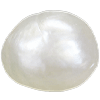
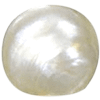




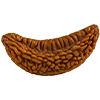
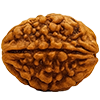
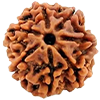
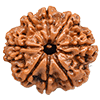
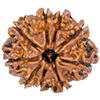
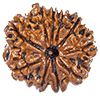








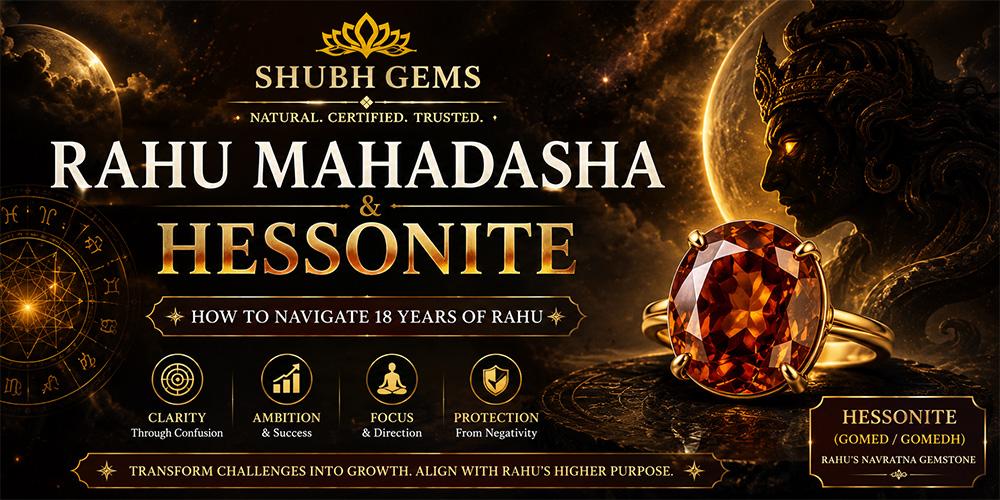
Of all the planetary periods in Vedic astrology, Rahu Mahadasha generates the most anxiety — and perhaps the most curiosity. Lasting 18 years, it is one of the longest major periods in the Vimshottari Dasha system. No other period promises such extremes: sudden career breakthroughs and unexpected setbacks, foreign opportunities and confusion, material gains and the testing of values. Rahu Mahadasha does not do ordinary — it does transformation.
Understanding what this period actually means, what role Hessonite — known as Gomed, Gomedh, or Gomedhikam — plays during it, and how to navigate 18 years of Rahu's intense energy with clarity and purpose is what this guide is for.
What Is Rahu Mahadasha — The Basics
In the Vimshottari Dasha system — the most widely used predictive framework in Vedic astrology — each planet rules a major planetary period (Mahadasha) for a specific duration. Rahu's Mahadasha lasts 18 years, placing it among the longest alongside Venus (20 years) and Saturn (19 years). The sequence of Dashas in the Vimshottari system is fixed: Sun (6 years), Moon (10 years), Mars (7 years), Rahu (18 years), Jupiter (16 years), Saturn (19 years), Mercury (17 years), Ketu (7 years), Venus (20 years).
When Rahu's Mahadasha becomes active in your chart — based on the Moon's Nakshatra at the time of your birth — Rahu's themes become the dominant backdrop of your life for 18 years. Everything from career opportunities to relationship dynamics, health patterns, spiritual inclinations, and financial cycles is coloured by Rahu's characteristic energy during this period.
Understanding Rahu — The Planet That Amplifies Desire
Rahu is not a physical planet. It is the North Lunar Node — the mathematical point where the Moon's orbital path crosses the ecliptic on its northward journey. In Hindu cosmological tradition, Rahu represents the head of the divine serpent Svarbhanu, severed by Lord Vishnu. It is a shadow planet (Chhaya Graha) — without a physical body, but with a profound influence on human destiny through its karmic significance.
Rahu governs ambition, material desire, foreign connections, technology, unconventional paths, sudden gains and losses, illusion, and the relentless pursuit of worldly experience. It amplifies whatever it touches — the house and sign it occupies, the planets it aspects or conjuncts all receive Rahu's intensifying, magnifying energy. Rahu is described in classical texts as a mastermind, a magician, and an illusionist — capable of extraordinary material success and equally capable of extraordinary confusion, depending on its chart placement and the integrity of the native.
What Rahu Mahadasha Actually Brings — Not What People Fear
Rahu Mahadasha is widely feared — and widely misunderstood. The fear is disproportionate to the reality for most charts. The experience of Rahu Mahadasha depends almost entirely on where Rahu is placed in the birth chart, which houses it rules for the specific Lagna, and whether Rahu is in a friendly or challenging sign and Nakshatra.
When Rahu Is Well-Placed — The Positive Rahu Mahadasha
A well-placed Rahu — in a Kendra (1st, 4th, 7th, 10th house) or Trikona (5th, 9th house),or in a friendly sign (Gemini, Virgo, Taurus, Capricorn, Aquarius), or conjunct a benefic planet — can make Rahu Mahadasha one of the most transformative and successful periods of a person's life. Rapid career ascent, sudden financial growth, foreign opportunities, technological success, fame, mass attention, and dramatic life expansion are all characteristic of a positive Rahu Mahadasha.
Many of India's most successful entrepreneurs, politicians, artists, and public figures have experienced their greatest growth during Rahu Mahadasha. Rahu's energy is unconventional, ambitious, and relentlessly forward-moving — when channelled constructively, it creates results that more conventional planetary periods would not.
When Rahu Is Challenging — The Difficult Rahu Mahadasha
When Rahu is ill-placed — in the 6th, 8th, or 12th house, in an enemy sign, or conjunct a malefic — Rahu Mahadasha can bring confusion, mental restlessness, relationship challenges, addictive tendencies, legal complications, and a persistent sense of misdirection despite effort. The illusion quality of Rahu means things may appear different from what they are — opportunities may not materialise as expected, and the native may struggle to distinguish genuine direction from Rahu's characteristic confusion.
The key insight: even a challenging Rahu Mahadasha carries lessons and opportunities specific to the individual chart. The challenges are not random — they reflect the karmic patterns Rahu is pushing the native to confront and transcend during this 18-year arc.
Rahu Mahadasha is neither universally good nor universally bad. Its character depends entirely on Rahu's placement in the individual birth chart. A personalised Kundali analysis is the only accurate way to understand what Rahu Mahadasha means specifically for you — and what remedies, including Hessonite, are appropriate for your situation.
Hessonite (Gomed / Gomedh / Gomedhikam) — Rahu's Navratna Gemstone
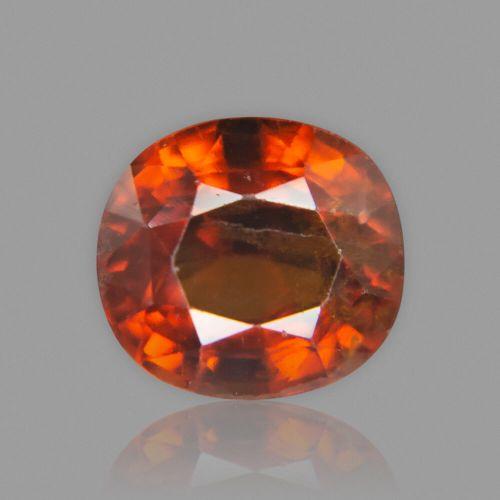
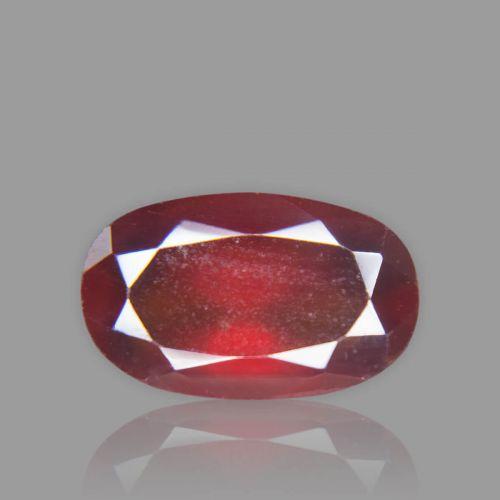
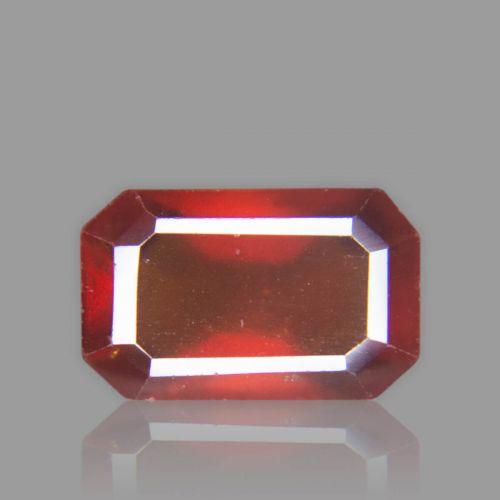
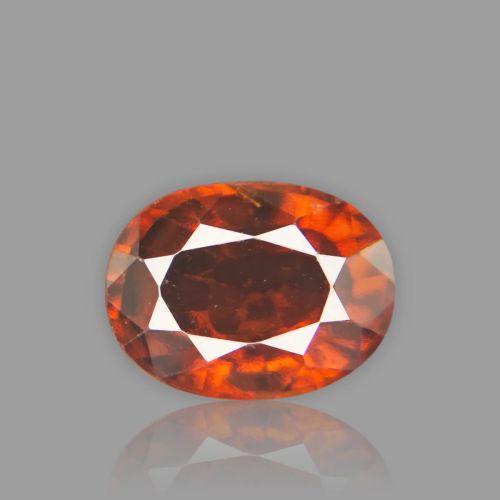
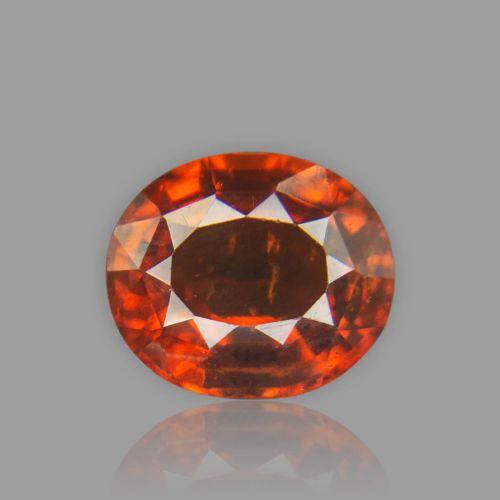
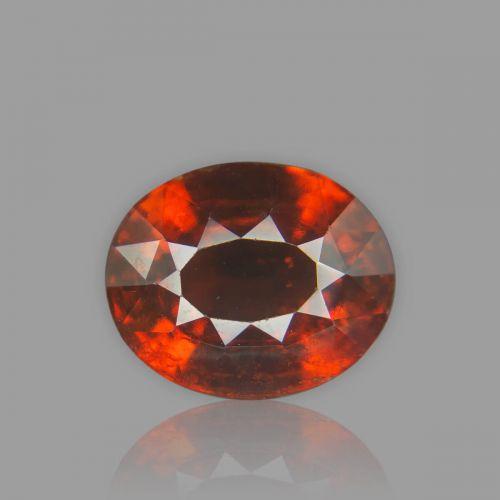
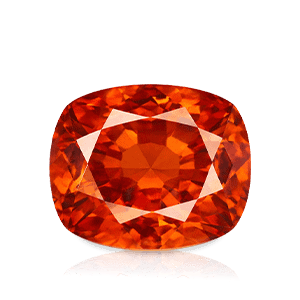
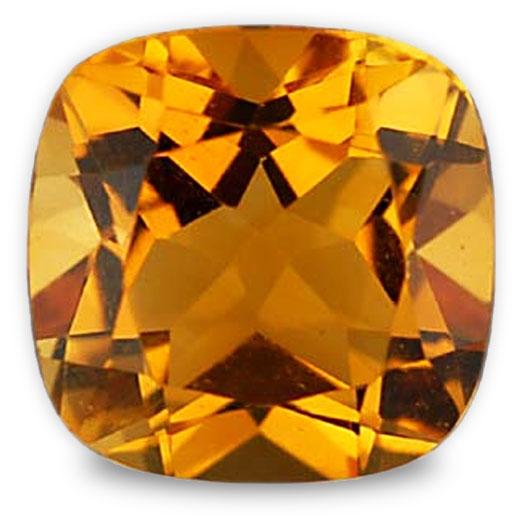
Hessonite — known as Gomed or Gomedh in Hindi, Gomedhikam in Sanskrit, and Rahu Ratna (Rahu's gem) colloquially — is the Navratna gemstone for Rahu. Belonging to the Grossular Garnet mineral family, it is characterised by its distinctive honey-yellow to deep cinnamon-brown colour. Classical Vedic texts describe the ideal Hessonite as resembling gomutra — the specific honey-golden tone of cow's urine — as the most auspicious colour for Rahu's gemstone.
Natural Hessonite has a unique internal characteristic called the treacle effect — a swirling, syrup-like internal appearance caused by its formation patterns. This treacle effect is a reliable indicator of natural origin and distinguishes genuine Hessonite from glass imitations. The finest Hessonite for astrological use comes from Ceylon (Sri Lanka), where the characteristic gomutra colour appears with good transparency, and the treacle effect is present without clouding the stone.
- Regional names: Gomed, Gomedh (Hindi), Gomedhikam (Sanskrit), Rahu Ratna, Tamra Mani
- Mineral family: Grossular Garnet
- Ideal colour: Honey-yellow to cinnamon-brown — the gomutra shade described in classical Vedic texts
- Key quality marker: The treacle effect — swirling internal appearance unique to natural Hessonite
- Best origin: Ceylon (Sri Lanka) — finest gomutra colour with treacle effect
- Metal: Silver or Panchdhatu — open-back setting
- Finger: Middle finger of the right hand
- Day: Wednesday or Saturday morning, Shukla Paksha
- Mantra: Om Raam Rahave Namah — 108 times before wearing
How Hessonite Helps During Rahu Mahadasha
Wearing Hessonite during Rahu Mahadasha — when Rahu is confirmed beneficial or needs channelling constructively in the chart — works by strengthening Rahu's positive energy while reducing the scattered, illusory quality that makes Rahu's more challenging expressions difficult to navigate.
- Clarity from confusion: Rahu's characteristic effect of mental confusion and misdirection is one of the most commonly reported challenges during Rahu Mahadasha. A well-prescribed Hessonite supports mental clarity, focus, and the ability to distinguish genuine opportunities from Rahu's illusions.
- Career and professional momentum: Rahu governs ambition, unconventional paths, and the drive for material success. Hessonite channels this ambition productively — supporting career growth, professional momentum, and the confidence to pursue unconventional but genuinely promising paths.
- Foreign connections and opportunities: Rahu is strongly associated with foreign lands, international connections, and opportunities that come through unconventional or unexpected channels. During Rahu Mahadasha, Hessonite supports the wearer in attracting and navigating these Rahu-governed opportunities effectively.
- Protection from negative Rahu energy: When Rahu's energy is challenging, Hessonite provides a stabilising influence — reducing the more destabilising aspects of Rahu's illusion and confusion while amplifying its constructive ambition.
- Reduced effects of Rahu Kaal and Rahu-related doshas: Regular wearing of certified natural Hessonite during Rahu Mahadasha is one of the most consistently recommended remedies for reducing the impact of Rahu-related challenges in the chart.
Hessonite must always be worn after a complete Kundali analysis confirming Rahu's placement and the appropriateness of this gemstone for the specific chart. Never wear Gomed, Gomedh, or Gomedhikam based on Rahu Mahadasha timing alone — chart placement, house lordship, and Lagna suitability must all be confirmed first.
Shubh Gems' Astro Vedic Experts analyse your complete Kundali to assess whether Hessonite is appropriate for your Rahu Mahadasha and identify the right quality and carat weight for your specific chart. Connect at shubhgems.com/astro-advice or call +91-8010-555-111.
Navigating the 18 Years — Practical Guidance
Rahu Mahadasha is 18 years — not a single uniform experience. It unfolds through a sequence of Antardasha (sub-periods) of each planet, each lasting from a few months to several years. The quality of each sub-period depends on both the overall Rahu Mahadasha context and the specific planet running the Antardasha.
Some general navigational principles for the full period:
- Embrace the unconventional: Rahu rewards those who are willing to step outside conventional paths. Opportunities during Rahu Mahadasha often come through unexpected, foreign, or non-traditional channels. Remaining open to these is more productive than seeking familiar routes.
- Guard against obsession: Rahu's energy can create intense, almost obsessive focus on material goals. While ambition is productive, obsession without wisdom leads to the confusion and over-reaching that characterises a difficult Rahu period. Periodic reflection and grounding practices help maintain perspective.
- Avoid deception and shortcuts: Rahu magnifies the consequences of unethical choices. Deception, dishonesty, and shortcuts taken during Rahu Mahadasha tend to compound — creating problems that outlast the period. Integrity is both the right approach and the most effective practical strategy.
- Consult your astrologer at key Antardasha transitions: The quality of Rahu Mahadasha changes significantly as different Antardasha periods activate. Consulting your Astro Vedic Expert at major sub-period transitions helps you understand what each phase brings and how to navigate it most productively.
Hessonite Quality — What to Look for When Buying Gomed
If Hessonite has been confirmed appropriate for your Rahu Mahadasha, quality matters significantly:
- Natural confirmed: Certificate from IIGJ, IGI, GIA, GJI, or GII confirming natural Hessonite Garnet. Never glass-filled or synthetic.
- Gomutra colour: Honey-yellow to cinnamon-brown — the ideal Rahu colour as described in classical texts. Deep reddish-brown is also acceptable. Pale or washed-out colour carries weaker Rahu energy.
- Treacle effect present: Visible under magnification — the swirling internal characteristic that confirms natural origin. Absent in glass imitations.
- Origin: Ceylon (Sri Lanka) is preferred for the finest quality. African Hessonite is astrologically valid at more accessible price points.
- Carat weight: Minimum 5 Ratti (approximately 4.5 carats) for most adults — confirm with your Astro Vedic Expert based on chart and body weight.
At Shubh Gems, our Hessonite (Gomed/Gomedh) is certified natural Grossular Garnet — treacle effect confirmed, gomutra colour, Ceylon and African origin available. Our Gemstone Consultants guide the right quality and carat within your budget. Connect at shubhgems.com/astro-advice or call +91-8010-555-111.
Frequently Asked Questions
I am entering Rahu Mahadasha. Should I automatically wear Hessonite?
No — entering Rahu Mahadasha does not automatically mean Hessonite should be worn. Whether Hessonite is appropriate depends on Rahu's specific placement in your birth chart — its house, sign, aspects, and house lordship for your Lagna. For some charts, Rahu is strongly beneficial, and Hessonite will powerfully support the Mahadasha. For others, Rahu rules challenging houses, and its gemstone may not be the appropriate remedy. Always confirm through a complete Kundali analysis with our Astro Vedic Experts before wearing Gomed.
Rahu Mahadasha started for me two years ago. Can I start wearing Hessonite now?
Yes — Hessonite can be worn at any point during Rahu Mahadasha once chart suitability has been confirmed, not only at the beginning. With 18 years of Rahu Mahadasha, there are many years during which Hessonite can provide meaningful support. Connect with our Astro Vedic Experts for a complete chart analysis to confirm suitability and identify the right quality stone for your specific situation.
What is the difference between Gomed, Gomedh, and Gomedhikam?
These are the same gemstone called by different names in different languages and traditions. Gomed and Gomedh are common Hindi names used across North India. Gomedhikam is the Sanskrit name as found in classical Vedic texts. Hessonite is the English gemological name. Rahu Ratna is the colloquial name meaning Rahu's gem. All refer to the same honey-brown Grossular Garnet that is Rahu's Navratna gemstone in Vedic astrology.
How long should I wear Hessonite during Rahu Mahadasha?
Hessonite is most directly relevant during Rahu Mahadasha and particularly during Rahu-Rahu Antardasha (the first sub-period). Whether to continue wearing it after Rahu Mahadasha ends depends on Rahu's overall position in your chart and whether its energy continues to be beneficial. Consult your Astro Vedic Expert as the Mahadasha draws to a close — typically 1 to 2 years before its end — to assess whether Hessonite should continue or whether a different gemstone becomes more relevant for the next Mahadasha.
Is Rahu Mahadasha always difficult?
No — this is one of the most important corrections to make about Rahu Mahadasha. A well-placed Rahu in a favourable house and sign can make these 18 years one of the most successful and transformative in a person's life. Rapid career growth, international success, sudden financial gains, technological achievement, and mass recognition are all characteristic of a positive Rahu Mahadasha. The outcome depends entirely on Rahu's chart placement, not on the Mahadasha name alone.
Final Thoughts
Rahu Mahadasha is 18 years of Rahu's amplifying, transformative energy — neither universally feared nor universally celebrated, but deeply shaped by Rahu's specific placement in the individual birth chart. Hessonite — Gomed, Gomedh, Gomedhikam — when correctly prescribed and genuinely sourced, channels Rahu's energy constructively, providing clarity, career support, and protection from the more destabilising aspects of this powerful period.
At Shubh Gems, our Astro Vedic Experts assess Rahu's exact placement and chart significance before recommending Hessonite for Rahu Mahadasha. Our Gemstone Consultants source only natural certified Grossular Garnet with the characteristic gomutra colour and treacle effect. Because the right Hessonite, worn at the right time with proper chart guidance, is one of the most effective tools Vedic astrology offers for navigating this extraordinary 18-year arc.




Thoughts