 +91 - 8010-555-111
 INR
INR  AUD - Australian Dollar
  BHD - Bahraini Dinar
  GBP - British Pound
  CAD - Canadian Dollar
  EUR - Euro
  HKD - Hong Kong Dollar
  IDR - Indonesian Rupiah
  ILS - Israeli New Shekel
  JPY - Japanese Yen
  KWD - Kuwaiti Dinar
  MYR - Malaysian Ringgit
  MUR - Mauritian Rupee
  NZD - New Zealand Dollar
  OMR - Omani Rial
  PHP - Philippine Peso
  QAR - Qatari Riyal
  SAR - Saudi Riyal
  SGD - Singapore Dollar
  CHF - Swiss Franc
  USD - US Dollar
  AED - United Arab Emirates Dirham
  VND - Vietnamese Dong












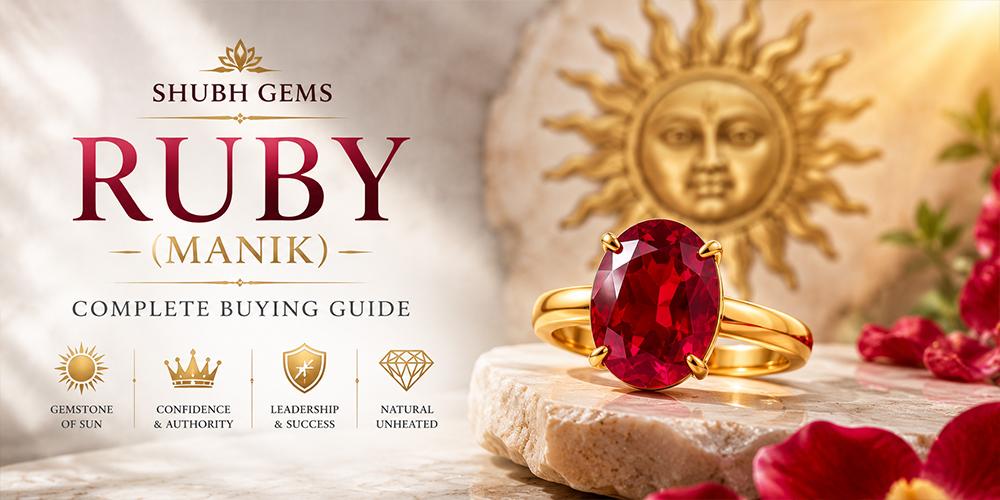
Ruby is called the King of Gemstones — and the Indian market reflects that status in the worst possible way. It is one of the most heavily treated, most commonly faked, and most widely misrepresented gemstones sold in India today. A buyer who does not know what to look for will almost certainly end up paying premium prices for a treated or synthetic stone that delivers zero astrological benefit.
This guide covers what truly matters before buying a natural Manik stone — origin differences, the treatment problem that plagues this gemstone, exactly what to check on your certificate, current honest price ranges, and the complete wearing guide.
What Is Ruby (Manik Stone)?
Ruby is a precious red variety of the mineral corundum (aluminium oxide) — the same mineral family as sapphire — coloured red by the presence of chromium. On the Mohs hardness scale it scores 9 out of 10, making it one of the hardest and most durable gemstones available. In Vedic astrology, Ruby is the gemstone of the Sun (Surya) — the source of all life and energy, governing confidence, authority, leadership, fame, career success, health of the eyes and bones, and the relationship with one's father.
Ruby is known by many names across India: Manik or Manikya (Hindi), Ratnaraj — King of Precious Stones (Sanskrit), Padmaraga (Sanskrit), Chuni (Bengali), Kempu (Kannada/Telugu), and Yakut or Yaqoot (Arabic/Urdu).
Who Should Wear Ruby (Manik)? Lagna & Rashi Guide
The guidance below is based on traditional Vedic astrology principles and is for general reference only. The Sun's placement and house lordship in your specific chart is unique to you. Connect with our Astro Vedic Experts for a free personalised recommendation at shubhgems.com/astro-advice — and speak with our Gemstone Experts on +91-8010-555-111 for quality and buying guidance.
Lagnas Most Suited for Ruby
- Leo Ascendant (Simha Lagna) — Sun is the Lagna lord. Ruby is the primary gemstone. Most strongly recommended for confidence, authority, and overall success.
- Aries Ascendant (Mesh Lagna) — Sun rules the 5th house (intelligence and creativity). Very beneficial for intellectual growth and creative endeavours.
- Scorpio Ascendant (Vrishchik Lagna) — Sun rules the 10th house (career and status). Strongly recommended for professional recognition and authority.
- Sagittarius Ascendant (Dhanu Lagna) — Sun rules the 9th house (fortune and father). Beneficial for fortune and relationship with the father.
- Cancer Ascendant (Karka Lagna) — Sun rules the 2nd house (wealth and family). Recommended for wealth and family harmony.
Ruby is also the birthstone for July and is commonly worn during Sun Mahadasha or Sun Antardasha, and by those in politics, bureaucracy, and leadership roles where Sun's energy is most relevant. For a personalised Ruby astrology recommendation, connect with our Astro Vedic Experts at shubhgems.com/astro-advice.
Ruby Origin — Burma, Mozambique & African: Which Is Best for Astrological Use?
Burmese Ruby — The Most Prized
Burma (Myanmar) — particularly the legendary Mogok Valley — produces the world's most celebrated Ruby. Known for its extraordinary pigeon's blood red colour — a pure, vivid red with a natural fluorescence that makes the stone appear to glow from within — Burmese Ruby is the benchmark for quality globally. At Shubh Gems, we source natural unheated Burmese Ruby for customers seeking the finest quality. It commands a significant price premium and always requires laboratory certification confirming Myanmar origin and no treatment.
For the rarest and most historically prized specimens, we also carry Old Burma Ruby — stones from Mogok's legendary mines, known for unmatched colour depth and fluorescence.
Mozambique Ruby — Excellent Quality, Better Value
Mozambique Ruby has become one of the most important Ruby sources in the world. Mozambique Rubies offer rich, deep red colour with good transparency and lustre — fully effective for astrological purposes and representing significantly better value than comparable Burmese quality. This is our most recommended origin for astrological buyers seeking genuine quality within a practical budget.
African Ruby — Natural Unheated at Accessible Prices
Shubh Gems also stocks more affordable natural, unheated, untreated African Ruby gemstones — providing genuine astrological quality for buyers with tighter budgets. The fundamental requirement is always the same: natural, unheated, untreated. A natural unheated African Ruby will always outperform a treated Burmese Ruby astrologically, because it is the treatment — not the origin — that destroys astrological effectiveness.
Bangkok Ruby — Avoid Completely
Stones processed through Bangkok are almost universally heat-treated, glass-filled, or otherwise enhanced. Bangkok is a processing hub, not a mining origin. Without a certificate explicitly confirming no treatment, Bangkok Ruby should be avoided entirely for astrological use.
The Treatment Problem — Why This Is the Most Critical Issue for Ruby Buyers
Of all the Navratna gemstones, Ruby has the most severe treatment problem. It is estimated that well over 90% of Rubies sold in the Indian market are treated in some form. Understanding this is not optional for any Ruby buyer — it is essential.
Heat Treatment — Destroys Astrological Energy
Heat treatment involves subjecting Ruby to extremely high temperatures to improve colour and reduce inclusions. While it dramatically improves the stone's appearance, heating permanently misaligns the Ruby's internal crystal structure. The natural cosmic energy — the precise vibrational frequency that aligns it with the Sun's energy in Vedic gemology — is permanently disrupted. A heat-treated Ruby, however beautiful, is astrologically inert.
Glass Filling — The Most Deceptive Fraud
Heavily fractured, low-quality Ruby is treated with lead glass that fills fractures, making the stone appear dramatically clearer than it actually is. The result looks like a clean, attractive Ruby but is structurally a composite of Ruby material and glass. Glass-filled Rubies are extraordinarily common in the Indian market — particularly in price ranges that seem attractively affordable — and carry absolutely zero astrological value.
What to Check on the Certificate — Your Most Important Protection
The certificate from IIGJ, IGI, GIA, GJI, or GII is the only reliable way to verify a Ruby is natural and untreated. The single most important field to check is the Treatment or Comments column:
- Must state: 'No indications of heating', 'Unheated', 'No treatment', or 'No evidence of fracture filling'
- Any mention of Heat Treatment, Glass Filling, Fracture Filling, or Lead Glass — reject the stone immediately for astrological use
- Species must say: Corundum | Variety must say: Ruby
At Shubh Gems, we provide certificates from IIGJ, IGI, GIA, and GJI with every Ruby. If you wish to independently verify your stone after purchase, approach any reputed gemological laboratory of your choice. We fully support and encourage this — never attempt home testing methods which are unreliable and can damage the stone.
Ruby Colour & Quality — What Makes a Manik Stone Astrologically Powerful
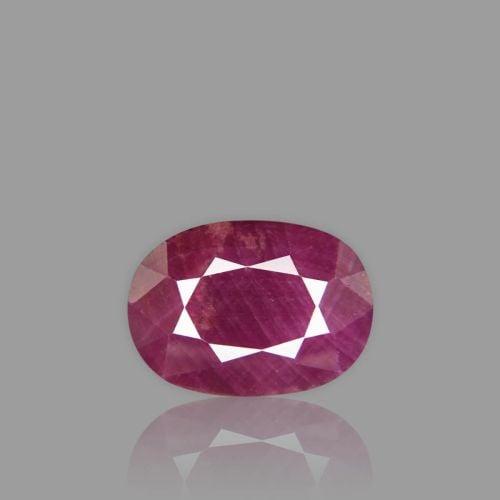
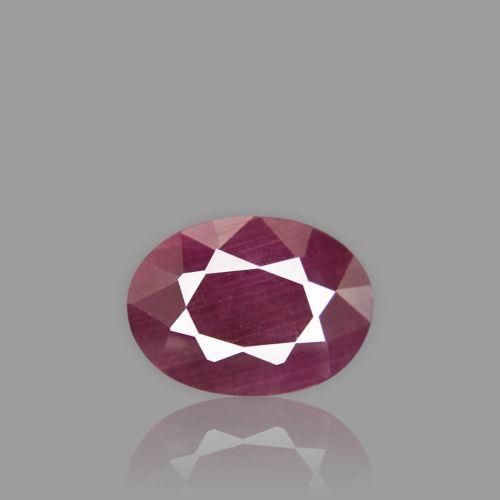
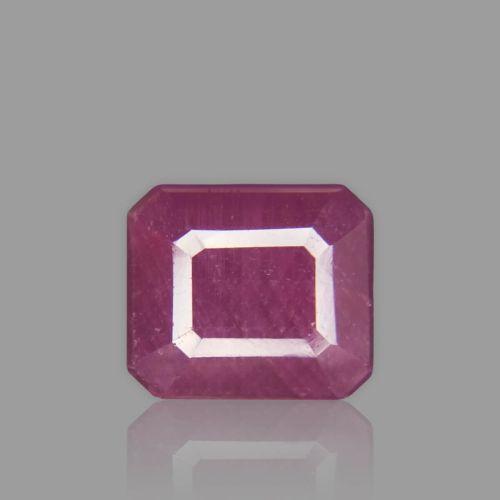
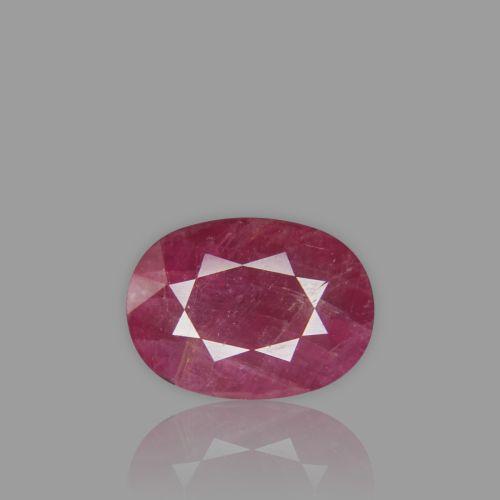
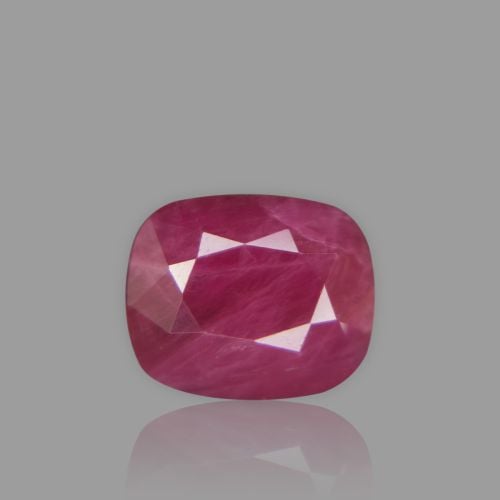
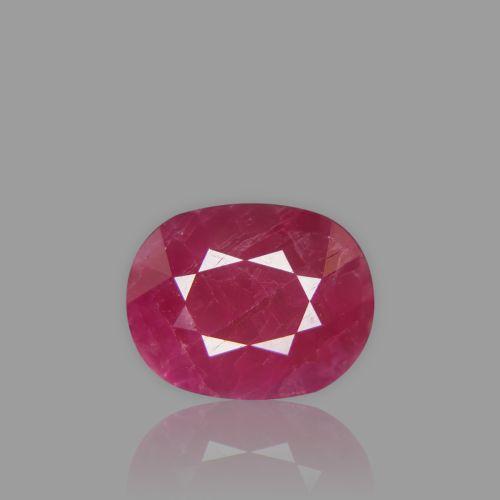
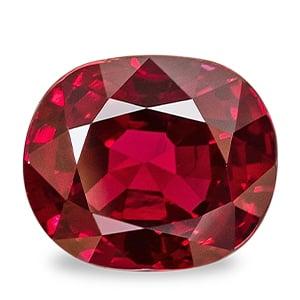
Ruby is primarily red with secondary hues of pink and purple. The closer the colour is to pure red, the more astrologically potent the stone.
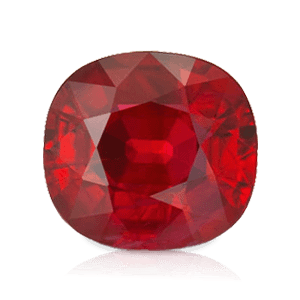
- Pigeon's Blood Red — The rarest and most prized colour. Pure, vivid red without any secondary hues, with a natural fluorescence. Seen primarily in the finest Burmese Rubies. Extremely rare and commands exceptional prices.
- Pure Deep Red — Rich, clean, well-saturated red without dominant secondary hues. Excellent quality for astrological use.
- Red with Pink or Purple secondary hue — Valid for astrology at good quality but below pure red in terms of Sun alignment and price.
Both colour and transparency together determine quality. Natural inclusions — silk, fingerprints, fine needles — are expected and acceptable. What disqualifies a stone for astrological use is dark or black inclusions, surface-reaching fractures, cavities, and cloudiness that significantly reduces transparency. Always choose quality over carat weight — a bright, transparent 3-carat Ruby delivers stronger astrological results than a dark, heavily included 6-carat stone.
Natural Unheated Ruby Price per Carat in India
- Medium quality — ₹2,000 to ₹5,000 per carat: Natural Ruby, decent red colour, visible inclusions, acceptable transparency. Genuine astrological quality at an accessible price.
- Good quality — ₹5,000 to ₹20,000 per carat: Natural Burma, Mozambique or African Ruby, good red colour, cleaner stone, good transparency and lustre. Most popular range for serious astrological buyers.
- Premium quality — ₹20,000 to ₹50,000 per carat: Very good to excellent red colour, eye-clean, excellent lustre. Fine Mozambique or Burmese quality.
- Top grade — ₹50,000 and above per carat: Finest natural Burmese Ruby, pigeon's blood or near pigeon's blood colour, exceptional clarity, top laboratory certification.
If a seller offers beautiful, clear, richly red Ruby at prices far below these ranges — particularly any claiming to be 'natural Burmese Ruby' at low prices — it is almost certainly heat-treated, glass-filled, or synthetic. For current Ruby price in India, speak with our Gemstone Experts on +91-8010-555-111.
Common Fakes & Substitutes Sold as Ruby in India
- Synthetic Ruby — Lab-created, chemically identical to natural but carries no cosmic energy. Zero astrological benefit. Requires a certificate to distinguish from natural.
- Red Garnet — The most commonly used and accepted astrological substitute (Uparatna) for Ruby. Carries Sun-like energy in a milder form. Valid when worn honestly as a substitute, fraudulent when sold as Ruby.
- Red Spinel — Historically confused with Ruby for centuries. A recognised Ruby substitute astrologically but a different gemstone entirely.
- Red Glass — Common in very cheap 'Ruby' jewellery. No gemological or astrological value.
If budget is a genuine constraint, Red Garnet is the most widely accepted astrological substitute for Ruby in Vedic gemology. Speak with our Gemstone Experts on +91-8010-555-111 for guidance on whether a substitute makes sense for your situation.
How to Wear Ruby (Manik) — Complete Vedic Guide
- Finger: Ring finger (Anamika) of the right hand — associated with the Sun in Vedic tradition
- Metal: Gold (22K or 18K hallmark) is most recommended. Panchdhatu is also accepted. Ring must be open-backed so the stone touches the skin directly.
- Day and Time: Sunday (Ravivar) morning, within the first two hours after sunrise, during Shukla Paksha (waxing moon phase)
- Mantra: Om Hraam Hreem Hraum Sah Suryaya Namah (ॐ ह्रां ह्रीं ह्रौं सः सूर्याय नमः) — recite 108 times before wearing
Energisation Ritual: Immerse the ring for 10 minutes in a mixture of raw milk, pure honey, Gangajal, pure ghee, and fresh Tulsi leaves. Remove, rinse gently with clean water, place on a red or orange cloth facing east (the Sun's direction), recite the mantra 108 times, then wear. Shubh Gems performs complete Pran Pratishtha before dispatch upon customer request.
Avoid combining Ruby with Blue Sapphire (Saturn), Hessonite (Rahu), or Cat's Eye (Ketu) without specific expert guidance — Sun and Saturn are natural enemies in Vedic astrology.
Why Shubh Gems for Your Ruby (Manik Stone)
In a market where over 90% of Rubies are treated, here is what you can count on from us across every Ruby purchase:
- 100% natural, unheated and untreated — without exception. No glass filling, no heat treatment, no enhancement of any kind
- Three origin options in one trusted source — Burmese for finest quality, Mozambique for excellent value, African for natural unheated quality at accessible prices
- Certified by IIGJ, IGI, GIA, GJI, or GII — Treatment column always states no treatment. We encourage every buyer to read their certificate carefully
- Fresh gemstones only — never previously owned or worn, never recirculated in the market
- Gemstone energisation service — complete Pran Pratishtha before dispatch upon customer request
- Customised ring setting in gold or Panchdhatu, open-back design for direct skin contact
- Independent verification always welcome — full refund if authenticity is ever in question, no time limits, no conditions
- Astro Vedic Experts for birth chart guidance + Gemstone Experts for quality and buying — complete guidance under one roof
Frequently Asked Questions About Ruby (Manik Stone)
Which origin Ruby is best for astrological use — Burma or Mozambique?
Both are recommended and both deliver excellent results when natural, unheated, and untreated. Burmese Ruby is rarer, more prized, and commands a significant price premium. Mozambique Ruby offers excellent quality at comparatively better value. The most important factor in either case is that the stone is natural and untreated. A natural unheated Mozambique Ruby will always outperform a treated Burmese Ruby astrologically.
Why does the Treatment column of the certificate matter so much for Ruby?
Because well over 90% of Rubies in the Indian market are treated — heat treated, glass filled, or both. A treated Ruby has had its natural crystal structure permanently altered, destroying the cosmic energy that makes it astrologically effective. The Treatment or Comments column of your IGI, GIA, IIGJ, or GJI certificate is the only reliable indicator. It must state 'No indications of heating', 'Unheated', or 'No treatment'. Any other mention disqualifies the stone for astrological use.
Is a glass-filled Ruby completely useless for astrology?
Yes — a glass-filled Ruby has no astrological value whatsoever. It is not a genuine Ruby in any meaningful sense — it is a combination of low-quality Ruby material and glass filler with no intact natural crystal structure. It cannot transmit any planetary energy. Never wear a glass-filled Ruby for astrological purposes.
What is Pigeon's Blood Ruby and do I need it for astrology?
Pigeon's blood is the most prized colour grade in Ruby — a pure, vivid red without any secondary orange or purple hues, often with a natural fluorescence. It is seen primarily in the finest Burmese stones and commands exceptional prices. While it represents the highest astrological potency in terms of colour purity, a good quality pure red Ruby from any natural unheated source is effective for astrological purposes. Pigeon's blood is not a prerequisite — natural and untreated always is.
Can I wear Red Garnet as a substitute if I cannot afford natural Ruby?
Yes — Red Garnet is the primary recognised astrological substitute for Ruby in Vedic gemology, carrying Sun energy in a milder form. If budget is genuinely constrained, it is a valid option. However, a smaller natural unheated Ruby of genuine quality will always deliver stronger astrological results than a larger Red Garnet. Our Gemstone Experts can guide you on what works best within your specific budget.
Can I buy natural Ruby online from India as an NRI?
Yes — Shubh Gems ships natural, certified Ruby to USA, UK, Canada, Australia, UAE, Singapore, and 50+ countries worldwide. Every purchase includes a laboratory certificate from IIGJ, IGI, GIA, GJI, or GII confirming natural origin and no treatment. Our lifetime authenticity commitment means you can get the stone independently tested at any laboratory at any time, and receive a full refund if authenticity is ever in question.
Final Thoughts
A genuine natural unheated Ruby — worn correctly on a Sunday morning in a gold ring — is one of the most commanding astrological remedies in Vedic tradition. Its power to strengthen the Sun's energy in your birth chart and bring leadership, recognition, and confidence is real. But that power depends entirely on the stone itself being real. A treated Ruby, however beautiful, is simply a red stone with no astrological relevance.
At Shubh Gems, every Ruby we sell carries our complete commitment to purity — natural, unheated, certified, backed by 25 years of trust and a guarantee you can verify at any laboratory, anywhere in the world.



Thoughts